
Choosing the Right Area Rug Size: A Guide for Homeowners

Updated: 6 days ago
Choosing the right area rug size can make the difference between a room that feels disconnected and one that feels balanced and complete. At ARC Rug Gallery, we help customers choose hand-woven rugs based not only on color and style, but also on room dimensions, furniture placement, traffic flow, and how the space is used. While there is no single rug size that works for every room, a few practical guidelines can make the decision much easier.
Understanding Rug Sizes
In most rooms, the rug should be large enough to connect the major pieces of furniture rather than sitting by itself in the center of the space. A rug that is too small can make a room feel divided. A properly sized rug helps define the space and creates a more intentional relationship between the furniture, flooring, and architecture.
Before shopping, measure the room and note the placement of:
Sofas and chairs
Tables
Beds
Doorways
Walkways
Floor vents
Built-in cabinetry
These measurements will help you determine which rug sizes are worth considering before you begin comparing colors and patterns.

Living Room Rug Size
The living room is one of the places where rug size has the greatest visual impact. For many living rooms, 8' x 10' and 9' x 12' rugs are common choices. Larger rooms may need a 10' x 14' rug or larger.
All Furniture on the Rug
In a large living room, the rug can sit beneath the entire seating arrangement, including the sofa, chairs, and coffee table. This creates a unified conversation area and works especially well in open floor plans where the rug helps visually define the living space.
Front Legs on the Rug
Another effective option is to place the front legs of the sofa and chairs on the rug while leaving the back legs off. This still connects the furniture visually while allowing more of the surrounding flooring to remain visible.
What to Avoid
A rug that sits only beneath the coffee table can look undersized, particularly when there is a large gap between the rug and the surrounding furniture.
When comparing two sizes, the larger option often creates a more balanced living room.

Dining Room Rug Size
A dining room rug needs to accommodate both the table and the chairs when they are being used. A useful guideline is to choose a rug that extends approximately 24 to 30 inches beyond the edges of the table. This gives diners enough room to pull their chairs back without the rear legs dropping off the rug.
For example:
A smaller four-person table may work with an 8' x 10' rug.
A six-person dining table often works well with a 9' x 12' rug.
Larger tables may require a 10' x 14' rug or custom size.
The shape of the rug should also complement the room and furniture. Rectangular rugs work naturally with most dining tables, while a round rug can create a beautiful relationship with a round table.

Bedroom Rug Size
A bedroom rug should provide softness underfoot while making the bed feel anchored within the room.
Queen Bed
An 8' x 10' rug is a common starting point for a queen-size bed. This typically allows the rug to extend beyond both sides and the foot of the bed while leaving the nightstands off the rug.
King Bed
A 9' x 12' rug is often better suited to a king-size bed, particularly in a larger primary bedroom. For a more generous look, a larger rug can extend beneath the nightstands as well.
Another Option: Bedside Runners
You do not always need one large area rug. A pair of hand-woven runners along the sides of the bed can add comfort and color while allowing more of the existing flooring to remain visible.

Entryway and Foyer Rug Size
An entry rug should feel proportional to the foyer without filling every inch of the floor. Leaving some flooring visible around the rug creates a natural border and helps the entry feel more spacious.
Also, consider door clearance. A beautiful rug is not practical if the front door catches on it every time it opens. Long, narrow entryways may work well with runners, while larger foyers can accommodate rectangular, square, or round rugs.
Hallway Runner Size
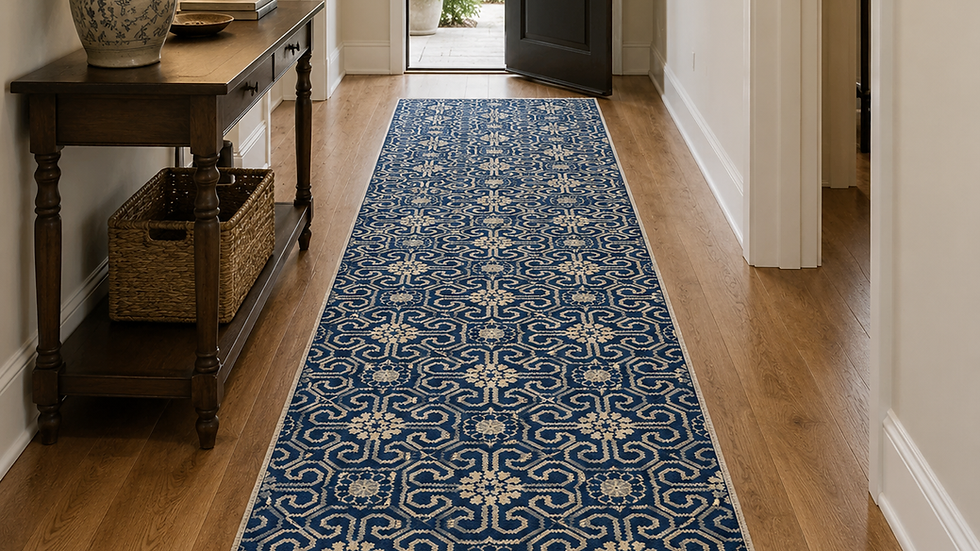
A hallway runner should define the passage without covering it completely. Measure the width and length of the hallway, then choose a runner that leaves visible flooring along each side. The runner does not necessarily need to extend the entire length of the hallway. A little exposed flooring at each end can create a more intentional appearance.
Because hallways receive considerable foot traffic, this is also an area where a properly fitted rug pad can be especially valuable.

Home Office Rug Size
For a home office, think about the entire working area rather than only the desk. Ideally, the rug should accommodate:
The desk
The desk chair
Guest chairs, if present
Normal chair movement
If you use a rolling office chair, make sure there is enough rug behind the desk for the chair to move comfortably without repeatedly crossing the edge. An 8' x 10' rug often works well in a traditional home office, although smaller or larger rooms may require a different size.

Open Floor Plans
Rugs are particularly useful in open floor plans because they can visually define individual areas without adding walls. A living room rug can distinguish the seating area from the dining space, while a separate dining rug establishes the next zone. The rugs do not need to match. Instead, look for a relationship between their colors, patterns, or overall style so the spaces feel connected without appearing overly coordinated.
Should the Rug Match the Shape of the Room?
Not necessarily. The furniture arrangement often matters more than the shape of the room itself. A round rug can soften a space dominated by straight lines. A runner can emphasize the length of a hallway. A rectangular rug can create structure within an irregular or open room. The best shape is the one that works naturally with the furniture and architecture around it.
Try the Painter's Tape Trick
Before purchasing a rug, use painter's tape to mark its proposed dimensions on the floor. For example, outline an 8' x 10' rug, then expand the tape to represent a 9' x 12' rug. Stand back and look at the room from several angles. This simple step makes it much easier to see:
How much flooring will remain exposed
Whether furniture will comfortably fit on the rug
Whether the rug feels proportional to the room
How the rug affects walkways and door clearance
It is much easier to change a tape outline than discover after purchase that the rug feels too small.
What If Standard Rug Sizes Do Not Work?
Some rooms simply do not fit standard dimensions. An unusually shaped room, oversized dining table, long hallway, or unique furniture arrangement may call for a custom solution. ARC Rug Gallery offers custom rug options, allowing customers to explore sizes, colors, and designs that better suit their individual spaces. That can be especially helpful when the difference between an ordinary room and a beautifully proportioned one comes down to a few extra inches.

Your Rug Pad Should Fit Too
Once you have selected the right rug, the pad underneath should be sized properly as well. At ARC Rug Gallery, we custom cut rug pads to fit the size and shape of your rug. A properly fitted rug pad can:
Help keep the rug securely in place
Add cushioning underfoot
Protect the flooring beneath it
Reduce unnecessary wear on the rug
Prevent the pad from showing around the edges
We offer thin, thick, and dual-surface rug pad options depending on the rug, flooring, and level of cushioning desired.
Bring Your Measurements With You
You do not need to know exactly what size rug you need before visiting the showroom. Bring your room dimensions, furniture measurements, and even a few photos of the space to ARC Rug Gallery. Our team can help you compare sizes and determine which proportions will work best with your room. The right rug should not simply fit the floor. It should fit the way you live in the room. Visit our Kensington showroom to explore hand-woven rugs in a wide variety of sizes, colors, patterns, and styles.
📍 4208 Howard Avenue, Kensington, MD
📞 301-493-4000



Comments